
Currently Empty: $0.00

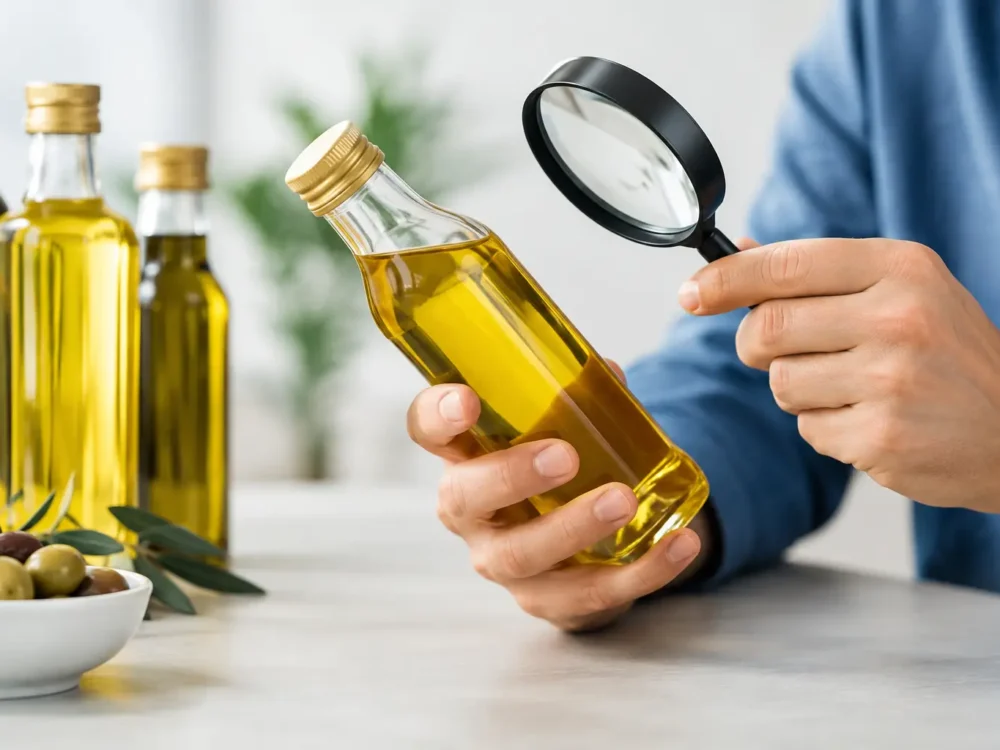
A low price, a glossy bottle, and the word “natural” can make an oil look like a smart wellness buy. But oils are among the products most likely to be diluted, poorly stored, or marketed with vague quality claims. Knowing how to identify oil purity helps you spend with confidence, whether you use black seed oil in softgels, coconut oil in the kitchen, or castor oil in your hair and skin routine.
Purity is not one single feature. It is the combination of what is inside the bottle, how the oil was extracted, whether it has been protected from heat and light, and how clearly the brand supports its claims. Here is what to look for before adding any oil to your daily routine.
How to Identify Oil Purity From the Label
Start with the ingredient list. For a pure, single-source oil, the label should name one botanical oil and nothing else. For example, a pure black seed oil should list Nigella sativa seed oil. Pure coconut oil should list coconut oil, and pure castor oil should list Ricinus communis seed oil.
If you see generic terms such as “vegetable oil blend,” “fragrance,” “mineral oil,” or several unnamed carrier oils, you are not buying a single pure oil. That does not automatically make the product unsafe or unsuitable. Blends can be useful in cosmetics or massage products. The issue is transparency: the front label should clearly tell you that it is a blend, rather than implying a purity it does not have.
Also look at the order of ingredients. In the United States, ingredients are generally listed from highest to lowest amount by weight. If the oil highlighted on the front appears near the end of a long ingredient list, it may be present in only a small amount.
For capsules and softgels, separate the active oil from the capsule shell. A clean black seed oil softgel may contain black seed oil plus a vegan capsule ingredient such as hypromellose. That does not mean the oil itself is diluted. What matters is that the supplement facts panel states the amount of oil per serving and identifies the botanical source clearly.
Look for the real botanical name
Common names can be confusing. “Black cumin,” for instance, may refer to more than one plant depending on the seller and region. A trustworthy label uses the Latin botanical name alongside the common name. This detail is small, but it shows that the brand knows exactly what it is sourcing.
For oils sold for wellness routines, look for specific language instead of broad promises. “Cold-pressed,” “extra virgin,” “unrefined,” and “organic” can be useful quality markers when they are backed by full product details. They are not interchangeable, however. Extra virgin is most relevant to oils such as olive and coconut oil, while cold-pressed describes a mechanical extraction approach that can help preserve naturally occurring compounds.
Check the Bottle Before You Check Out
Light, oxygen, and heat are not friendly to oils. Even a pure oil can lose quality if it is stored badly for too long. Dark amber or opaque packaging helps protect light-sensitive oils, particularly black seed oil and other oils rich in unsaturated fats. Clear glass is not always a deal-breaker, but it offers less protection if the product sits under bright retail lighting.
A secure cap, sealed neck, and clear lot or batch number are good signs. The batch number matters because it allows a brand to trace a product if there is a quality concern. A best-by date is useful too, but freshness depends on storage after opening. Keep oils in a cool, dry place away from direct sunlight, and close the lid tightly after use.
Packaging should also fit the purpose. A large jar of coconut oil can work well if your household uses it regularly for cooking or body care. A smaller bottle may be the better choice for a specialty oil you use slowly. Buying more than you can finish before quality declines is not a bargain.
Use Aroma and Texture as Clues, Not Proof
Your senses can flag an obvious problem, but they cannot certify purity. Fresh oils have their own natural character. Black seed oil often has a peppery, earthy aroma and a bold taste. Extra virgin coconut oil may have a light, clean coconut scent. Castor oil is naturally thick, pale yellow to nearly clear, and has a mild, distinctive odor.
Be cautious if an oil smells sharply sour, paint-like, stale, or unusually rancid. These can be signs of oxidation. A strange separation, unexpected cloudiness, or sticky residue may also suggest a storage issue, depending on the oil and temperature. Coconut oil naturally turns solid in cooler conditions and melts with warmth, so texture changes alone are not evidence of poor quality.
Do not rely on viral home tests, such as refrigeration tests or water tests, to prove an oil is pure. They may create interesting visual changes, but they cannot reliably detect adulteration. Different oils react differently to temperature, and even a blended oil can pass a simple kitchen experiment.
Look for Testing and Traceability
The strongest evidence of purity comes from documented quality control. Reputable brands should be able to explain where their oil comes from, how it is processed, and what testing is performed. Depending on the oil, testing may screen for contaminants such as heavy metals, microbial growth, pesticides, or oxidation markers.
For black seed oil, another useful detail is thymoquinone, often called TQ. This naturally occurring compound is associated with Nigella sativa and can vary widely based on seed quality, growing conditions, extraction, and storage. A stated TQ content can be a meaningful quality signal when it is supported by batch-specific testing. It should not be treated as the only measure of quality, because an oil can have a strong headline number yet still be poorly handled or insufficiently tested for contaminants.
Organic certification can also matter, especially for oils used frequently in food or topical routines. It speaks to agricultural standards, but it does not replace purity testing or good manufacturing practices. Think of quality signals as a checklist, not a single badge.
When product information is vague, ask direct questions before purchasing: What is the country of origin? Is the oil cold-pressed? Is it tested by an independent laboratory? Can the company provide a certificate of analysis for the current batch? A credible seller should be comfortable giving straightforward answers.
Match the Oil to Your Intended Use
Purity is only useful if the product is appropriate for how you plan to use it. An oil formulated for hair or skin may include ingredients that are not intended for food. A culinary oil may be pure but not packaged or portioned for convenient supplementation. Read the directions, suggested use, and warnings rather than assuming every oil is interchangeable.
For busy routines, capsules and softgels can make consistency easier. They offer a measured serving, reduce exposure to air after opening, and avoid the strong taste of certain oils. Liquid oils are more flexible for cooking, topical use, or adding to a personal wellness routine, but they require more attention to storage and serving size.
If you are pregnant, breastfeeding, taking medication, managing a medical condition, or considering oil supplements for a child, speak with a qualified healthcare professional first. Natural does not mean risk-free, particularly at concentrated supplemental doses.
Red Flags That Deserve a Second Look
A few patterns should slow down your purchase decision. Be wary of miracle claims that promise to cure diseases, vague labels with no botanical name, prices that seem dramatically lower than comparable products, and brands that provide no information about sourcing or testing. Customer reviews can help you judge packaging, taste, and delivery experience, but they cannot verify chemical purity.
The best purchase is rarely the one with the loudest claim. It is the product that tells you what it is, where it came from, how it was handled, and how it fits into your routine. Choose the oil you can identify clearly, store correctly, and use consistently – that is where a clean wellness habit starts.